
2026 C&C Prize Recipients

The recipients of the 2026 C&C Prize were selected as shown below.
Group A
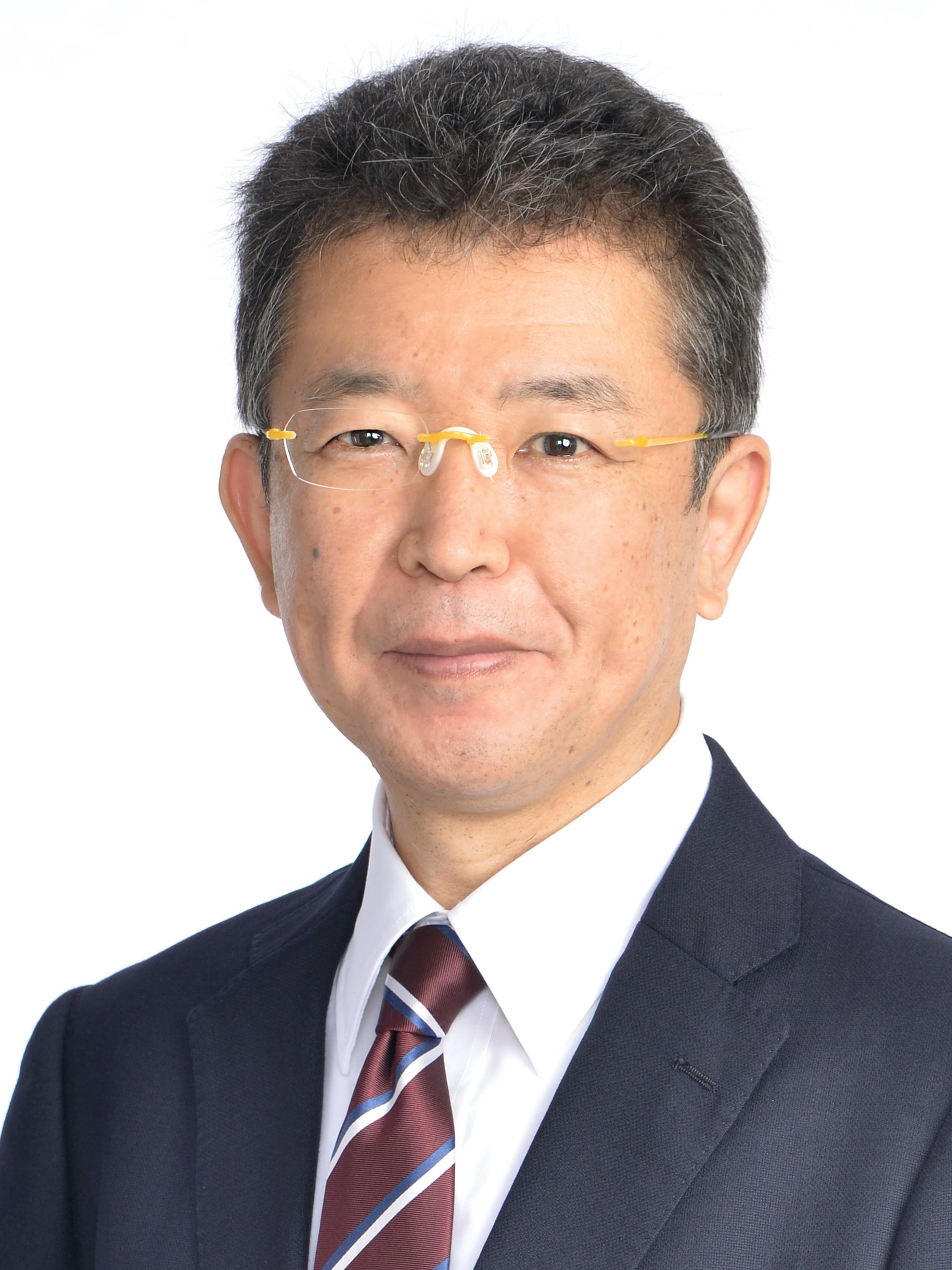
Dr. Hidetoshi Katori Professor, Department of Applied Physics, Graduate School of Engineering, The University of Tokyo |
Citation
Pioneering Contributions to the Realization of the Optical Lattice Clock
Achievements (Summary)
Precise time measurement is a fundamental technology that underpins modern information and communications technology (ICT) society, including information and communications networks, global navigation satellite systems, electronic transactions, and scientific measurements. The current definition of the “second” is based on the cesium atomic clock, which uses the frequency of microwaves absorbed and emitted by cesium-133 atoms as its standard. On the other hand, by utilizing optical transitions in atoms—which have frequencies approximately 100,000 times higher than those of microwaves—time can be divided into finer intervals, offering the potential to significantly improve the accuracy of clocks. Against this backdrop, research and development of optical atomic clocks has been advancing. Dr. Hidetoshi Katori proposed the concept of the optical lattice clock, in which a large number of atoms are trapped in an optical lattice formed by laser light and their characteristic optical transition frequencies are measured simultaneously, and, by actually realizing it, established an ultra-high-precision time standard that far surpasses conventional atomic clocks. Furthermore, he extended these results to relativistic geodesy, which uses optical lattice clocks to detect differences in clock rates caused by variations in gravitational potential, as predicted by general relativity, and thereby measure differences in height and gravitational potential, and spacetime sensing that uses relativistic geodesy to monitor temporal and spatial changes such as crustal deformation and volcanic activity, paving the way for applications in next-generation information and communications, quantum technology, and precision positioning. Dr. Katori’s achievements span the proposal and demonstration of the principles behind ultra-high-precision optical lattice clocks, their application to relativistic geodesy and spacetime sensing, and their practical implementation for societal deployment. These contributions significantly advance the information and communications technologies that underpin precise control, positioning, and synchronization, and serve as a prime example of C&C technology—a highly integrated fusion of high-stability lasers, photonics, electronic control, and vacuum and cooling technologies. These achievements can be highly regarded as outstanding accomplishments worthy of the C&C Prize.
Group B
>> Group B: Detailed Information

Dr. Andrew G. Barto Professor Emeritus, University of Massachusetts Amherst |

Dr. Richard S. Sutton Professor, University of Alberta |

Dr. Christopher J. Watkins Professor, Royal Holloway, University of London |
Citation
Pioneering Contributions to the Establishment of Reinforcement Learning Concepts and Algorithms
Achievements (Summary)
Artificial intelligence (AI) is a technology that enables computers to perform intellectual activities — such as perception, judgment, and decision-making — traditionally carried out by humans. It holds the promise of bringing about significant transformations in society, industry, and people’s lives through increased productivity and the creation of new services. While supervised learning trained on a set of examples labeled with correct responses has been the mainstream approach to learning in traditional AI, a key challenge has been to enable systems to learn through interaction with the external environment and make autonomous decisions even in situations where correct responses are not provided in advance.
Dr. Andrew G. Barto, Dr. Richard S. Sutton, and Dr. Christopher J. Watkins addressed this challenge by establishing the conceptual and mathematical foundations of reinforcement learning, a machine learning approach in which an agent learns through trial and error, using rewards obtained through interactions with its environment, a policy that maximizes long-term cumulative reward, and developing practical, highly versatile reinforcement learning algorithms that do not rely on labeled training examples, thereby making significant contributions to the advancement of modern AI.
Reinforcement learning, pioneered by Dr. Barto, Dr. Sutton, and Dr. Watkins, has become a general-purpose decision-making technology not limited to specific tasks and has evolved into deep reinforcement learning through its integration with deep neural networks. Its applications have expanded to include game AI, communication network control, semiconductor design, and the optimization of logistics and energy management. Furthermore, reinforcement learning that utilizes human feedback has become a technology for improving the quality of generative AI responses, helping to ensure that they are safe, reliable, and aligned with human intent. It is also expected to play a crucial role in the future development of an AI-driven society as a core technology supporting behavioral learning in physical AI and next-generation robot control. The achievements of Dr. Barto and Dr. Sutton, who established the key concepts and mathematical foundations of reinforcement learning, and those of Dr. Watkins, who devised Q-learning and significantly advanced the practical application of reinforcement learning, have had an immense impact on the development of information processing and intelligent information technology. These achievements are highly regarded as outstanding contributions worthy of the C&C Prize.